did you see, have you seen, Did You See, Have You Seen, Did, Have, You, See, Seen, English, expressive English, spoken English, everyday English, Mastering English, English grammar, English learners, learner, learners, student, students, language, language skill, language learning, English learning, learning, grammar, grammar confusion, grammar comparison, grammar patterns, grammar learning journey,
grammar accuracy, grammar mastery, grammar rules, grammar usage, strong grammar usage, clear grammar explanation, practical grammar techniques, tense, verb tense, present perfect, present perfect tense, past simple, right tense, tense comparison, tense consistency, accurate tense usage, choosing tense correctly, meaning, semantic meaning, contextual meaning, sentence, sentence meaning, sentence structure, sentence interpretation, simple example sentences, practical examples, helpful examples, examples, examples demonstration, demonstrations, comparison, comparison analysis,
context, understand context, context analysis, contextual timing, contextual reference, weak contextual reference, present contexts, past, past event, past events, recent past, present relevance, particular moment, specific moment, particular event, specific time, no time reference, time, time reference, timeframe, short timeframe, duration, completed duration, action, actions, completed action, completed actions, completed event, completed, finished action, finished moments, continuing, ongoing experiences,
Quick Answer – Have You Seen vs Did You See in Simple Terms
Let’s make this crystal clear from the start.
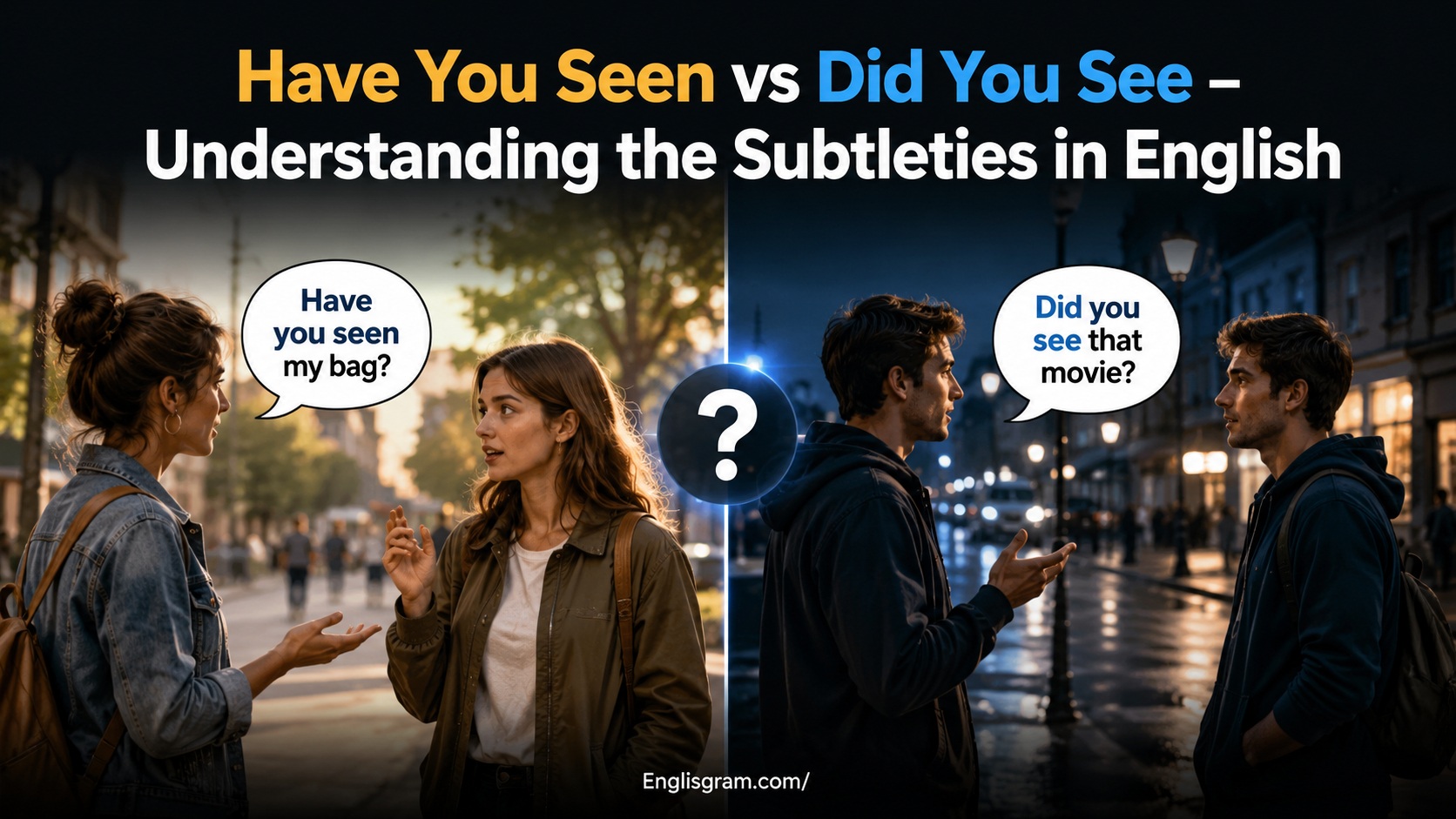
- Have you seen → Use when time is NOT important or still connected to now
- Did you see → Use when you talk about a finished time in the past
Simple examples
- Have you seen my phone? (I still don’t have it now)
- Did you see my phone yesterday? (I refer to a specific time in the past)
Think of it like this:
Have you seen = “Up to now, what is the result?”
Did you see = “At that exact time, what happened?”
This one idea alone fixes most confusion.
Core Grammar Difference – Present Perfect vs Past Simple
To understand Have you seen vs Did you see, you need to see the grammar behind them.
Have you seen (Present Perfect)
This structure uses:
have/has + past participle (seen)
What it means
- Action happened in the past
- But it still matters now
- No specific time mentioned
Real meaning in daily life
You use it when the result is still relevant.
Examples
- Have you seen this message?
- Have you seen my bag anywhere?
- Have you seen that movie?
Notice something important:
You do NOT say when it happened.
Did you see (Past Simple)
This structure uses:
did + base verb (see)
What it means
- Action is fully finished
- Time is known or implied
- It stays in the past
Examples
- Did you see the movie last night?
- Did you see my message yesterday?
- Did you see what happened at 5 PM?
Here, the time is clear. The moment is closed.
Why English Uses Two Forms Instead of One
English does something interesting. It separates:
- Past action with present connection
- Past action with no present connection
Many languages do not make this difference clearly. English does.
Think of it like this
- “Have you seen” = a bridge between past and present
- “Did you see” = a closed door in the past
This small difference changes meaning more than learners expect.
Meaning in Real Conversations – What Native Speakers Actually Mean
Grammar books explain structure. But real life is different.
Let’s explore how people actually feel when they use these phrases.
Have you seen – soft and open-ended
When someone says:
- “Have you seen my keys?”
They usually mean:
- I still need them
- I expect a yes/no answer
- I am not focusing on time
It feels natural and ongoing.
Did you see – direct and time-focused
When someone says:
- “Did you see my keys yesterday?”
They mean:
- I care about a specific moment
- I am checking a past event
- The situation is already finished
It feels more factual.
Real-Life Examples You Hear Every Day
Let’s bring this into real situations so it sticks.
At home
- Have you seen my charger?
- Did you see my charger in the kitchen last night?
- Have you seen the remote?
- Did you see the remote after dinner?
At work
- Have you seen the report I shared?
- Did you see the report I sent this morning?
- Have you seen the email thread?
- Did you see my email at 9 AM?
On social media
- Have you seen this viral video?
- Did you see that post yesterday?
- Have you seen this trend?
- Did you see the story I posted last night?
Key insight
Notice how “Have you seen” often feels like:
- Ongoing curiosity
- Current relevance
While “Did you see” feels like:
- Checking history
- Confirming a past event
Read More:Jewel vs Joule Homophones: Spelling, Definition, and Key Differences Explained Clearly
Time Reference – The Biggest Clue You Should Never Ignore
Time decides everything here.
If time is NOT mentioned
Use Have you seen
- Have you seen my phone?
- Have you seen this movie?
If time IS mentioned
Use Did you see
- Did you see my phone yesterday?
- Did you see the movie last weekend?
Common time words that trigger “Did you see”
- yesterday
- last night
- last week
- in 2024
- earlier
- this morning (when finished)
- at 5 PM
Example table
| Sentence | Correct Form | Reason |
| ___ you see my bag yesterday? | Did you see | Specific time |
| ___ you seen my bag? | Have you seen | No time given |
| ___ you see the email at 9 AM? | Did you see | Past timestamp |
| ___ you seen the email? | Have you seen | Still relevant |
Tone and Politeness – Why It Matters More Than You Think
This part surprises many learners.
Have you seen = softer tone
It feels:
- Polite
- Open
- Less demanding
Example:
- Have you seen my notes?
It sounds like a gentle request.
Did you see = more direct
It feels:
- Factual
- Specific
- Slightly sharper
Example:
- Did you see my notes yesterday?
It sounds like a check or confirmation.
Real-life comparison
Imagine a teacher asking a student:
- Have you seen the assignment sheet? (general reminder)
- Did you see the assignment sheet I gave yesterday? (specific check)
Same meaning. Different tone.
Common Mistakes Learners Make (And Why They Happen)
Let’s fix real errors people make every day.
Mistake 1: Mixing both forms randomly
Did you seen my message?
Did you see my message?
Have you saw my message?
Have you seen my message?
Mistake 2: Using “Did you see” without time
Did you see my phone? (confusing if no time)
Have you seen my phone?
Mistake 3: Using “Have you seen” with clear past time
Have you seen my message yesterday?
Did you see my message yesterday?
Why this happens
Learners focus on translation instead of time logic. English does not care only about grammar. It cares about time perspective.
Simple Rule You Can Remember Forever
Let’s make it ultra simple.
Use HAVE YOU SEEN when:
- You do not know when it happened
- It still matters now
- You expect a result or answer
Use DID YOU SEE when:
- You know the time
- The action is finished
- You talk about a specific moment
Memory trick
If the moment is open → HAVE YOU SEEN
If the moment is closed → DID YOU SEE
Side-by-Side Comparison Table (Quick Revision Tool)
| Feature | Have you seen | Did you see |
| Grammar | Present perfect | Past simple |
| Time | Unclear or ongoing | Specific past time |
| Focus | Result now | Event in past |
| Tone | Polite, soft | Direct, factual |
| Example | Have you seen my phone? | Did you see my phone yesterday? |
Mini Practice Section – Test Your Understanding
Try these:
Fill in the blanks
- ___ you seen my glasses?
- ___ you see the match last night?
- ___ you seen this email?
- ___ you see the accident at 5 PM?
Answers
- Have you seen
- Did you see
- Have you seen
- Did you see
Why This Difference Actually Improves Your English Fast
Once you understand this concept, your English becomes more natural instantly.
You will:
- Sound closer to native speakers
- Avoid common grammar mistakes
- Understand movies and conversations better
- Improve both speaking and writing
It is not just grammar. It is communication clarity.
A Real Conversation Example (Case Study Style)
Let’s see it in action.
Scenario: Lost phone
Friend A: Have you seen my phone?
Friend B: No I haven’t seen it. Where did you last have it?
Later…
Friend A: Did you see my phone on the table yesterday?
Friend B: Yes I saw it there around 8 PM.
What changed?
- First question = current situation
- Second question = past investigation
Same topic. Different time focus.
Final Takeaway – Think Like a Native Speaker
If you remember nothing else, keep this:
English does not only ask “what happened.”
It asks:
- Is this still important now?
- Or is it already finished in the past?
That decision controls everything between Have you seen and Did you see.
Once you start thinking this way, you stop memorizing rules. You start using English naturally.
And that is where real fluency begins.
FAQs
1. What is the difference between “Did you see” and “Have you seen”?
Did you see is used for a completed action at a specific time in the past, while Have you seen is used for recent experiences or actions connected to the present.
2. When should I use “Did you see”?
Use Did you see when you mention a clear past time, such as yesterday, last week, or another completed moment.
3. When should I use “Have you seen”?
Use Have you seen when the exact time is not important and the action is still relevant now.
4. Is “Have you seen yesterday” correct?
No. Since yesterday is a specific past time, the correct form is “Did you see yesterday?” or “Did you see it yesterday?”
5. How can I remember the rule easily?
Remember this simple tip: specific past time = Did you see; no specific time or present connection = Have you seen. Practising with real conversations and examples will make the choice feel natural.
Conclusion
Understanding the difference between Did You See and Have You Seen helps you choose the right tense with confidence. Use Did You See for a finished past event with a specific time, and use Have You Seen when the action has present relevance or no stated time. With regular practice, practical examples, and attention to context, you will improve your English grammar, communication skills, and spoken English naturally.